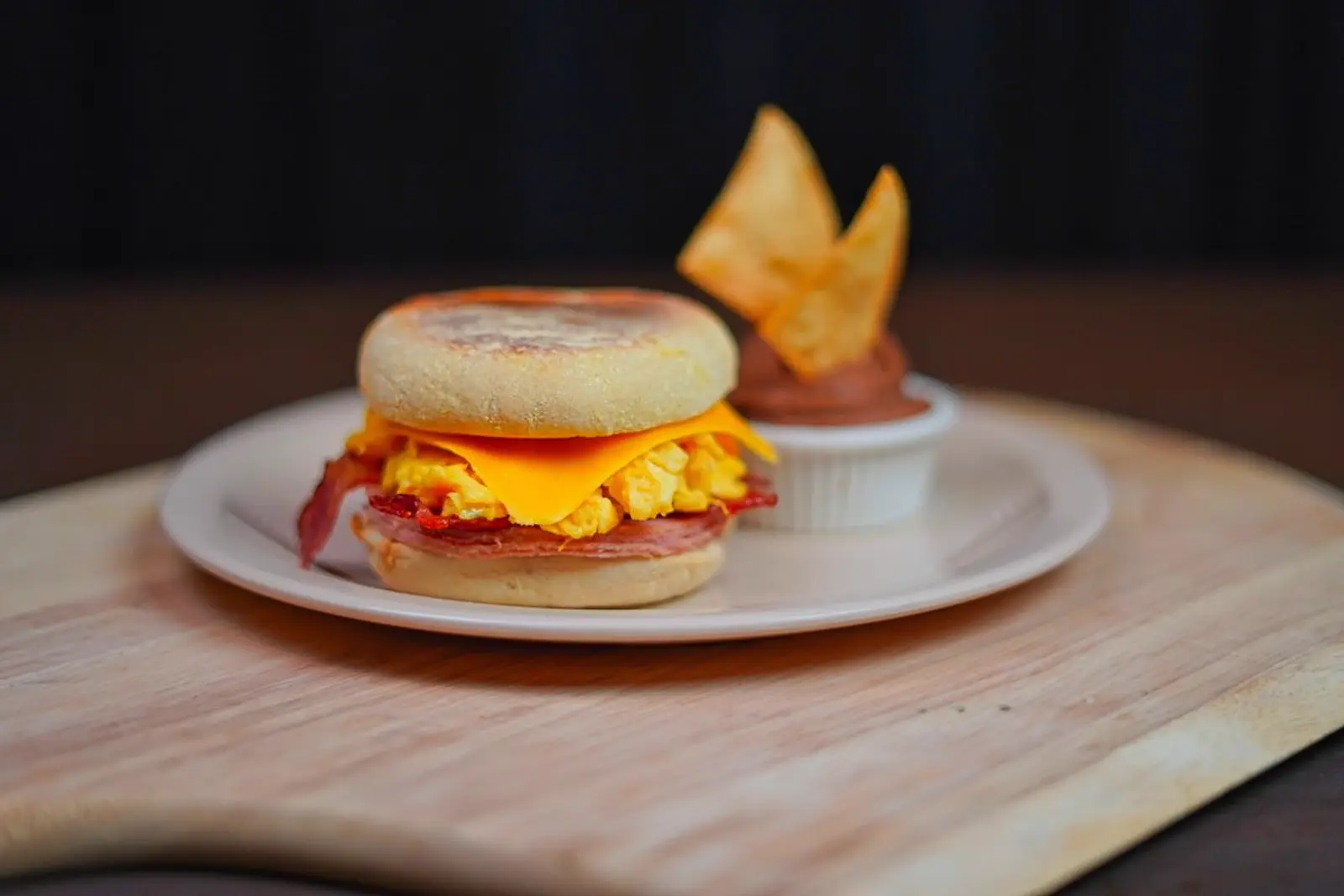
Breakfast Sandwich
A good breakfast sandwich is the best kind of morning shortcut. It takes one pan, about fifteen minutes, and ingredients you probably already have — and it turns them into something warm, filling and properly satisfying. Toasted English muffin, a fluffy egg, cheese melted right into it, and crispy bacon if you want it: that is the whole idea, and it works every single time.
This is the version to learn first. It is a classic breakfast sandwich in the simplest sense — egg and cheese on a toasted English muffin, with bacon as an optional extra — and once you know it, you can change it a hundred ways. Make one for a slow Saturday morning, or make four on Sunday and freeze them for the week. Either way, the method below is the one to keep.
This post gives you the base recipe first, then the three ways to cook the egg, the fixes for everything that usually goes wrong, and the make-ahead method that turns a fifteen-minute breakfast into a one-minute one.
Why This Breakfast Sandwich Works
First, the muffin must be toasted properly. An English muffin straight from the packet is soft and pale, and it goes soggy the moment the hot egg lands on it. A proper toast — golden and crisp on the cut sides, with the butter melted in — gives the sandwich a firm base that holds up to the egg, the cheese and any sauce.
Second, the cheese goes on the hot egg, not on the cold muffin. Cheese melts from the heat of the egg, so it turns soft and gooey and holds the sandwich together. Put it on the muffin first and it stays firm and slides around when you take a bite.
Third, the egg should be cooked gently. Eggs cooked on high heat turn rubbery and dry in seconds. Medium-low heat, a little butter, and a lid on the pan give you a tender egg with a soft centre — the kind that makes the sandwich feel homemade rather than hurried.
Ingredients for a Breakfast Sandwich
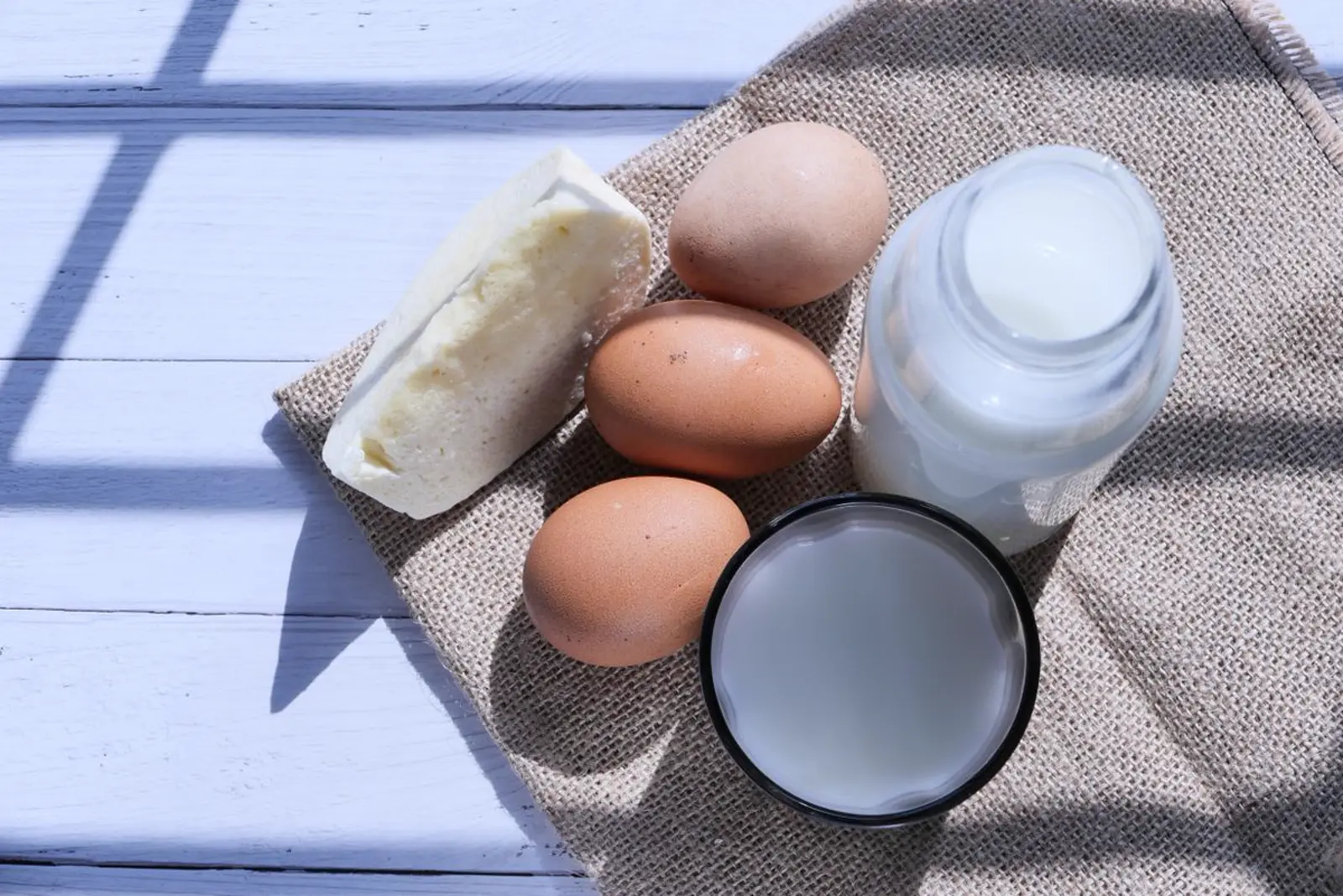
This makes 4 sandwiches. It halves easily for two, and it doubles well for a crowd — just cook the eggs in batches.
- 4 English muffins, split in half
- 4 large eggs
- 4 slices cheddar cheese (or American, Swiss or provolone)
- 2 tablespoons butter, divided
- 4 rashers bacon or 4 small sausage patties (optional)
- Salt and black pepper, to taste
- 1 tablespoon milk (optional — a splash in scrambled eggs makes them softer)
A note on the muffins: English muffins are the classic choice because their nooks and crannies catch the melted cheese and their sturdy crumb does not fall apart. Bagels, brioche buns and thick-sliced sourdough all work too, but a soft sandwich loaf will go soggy — save that for toast. For the cheese, a good melting cheese matters more than a fancy one: cheddar gives flavour, American melts the smoothest, and provolone sits nicely in between.
How to Make a Breakfast Sandwich, Step by Step
Step 1: Toast the muffins
- Split the English muffins and butter the cut sides lightly.
- Toast them in a dry pan over medium heat, cut side down, for 2–3 minutes until golden, or use the toaster. You want the edges crisp and the middles warm.
- Set the toasted halves aside on a plate. Keep the bottom halves and top halves in two groups so assembly is quick later.
Step 2: Cook the bacon or sausage (optional)
- If you are using bacon, cook it in the same pan over medium heat for 3–4 minutes per side until crisp, then lift it onto kitchen paper to drain.
- If you are using sausage patties, cook them for 3–4 minutes per side until browned all over and cooked through.
- Leave the fat in the pan — a little of it in the eggs adds flavour. If there is a lot, pour most of it off and leave about a teaspoon behind.
Step 3: Cook the eggs
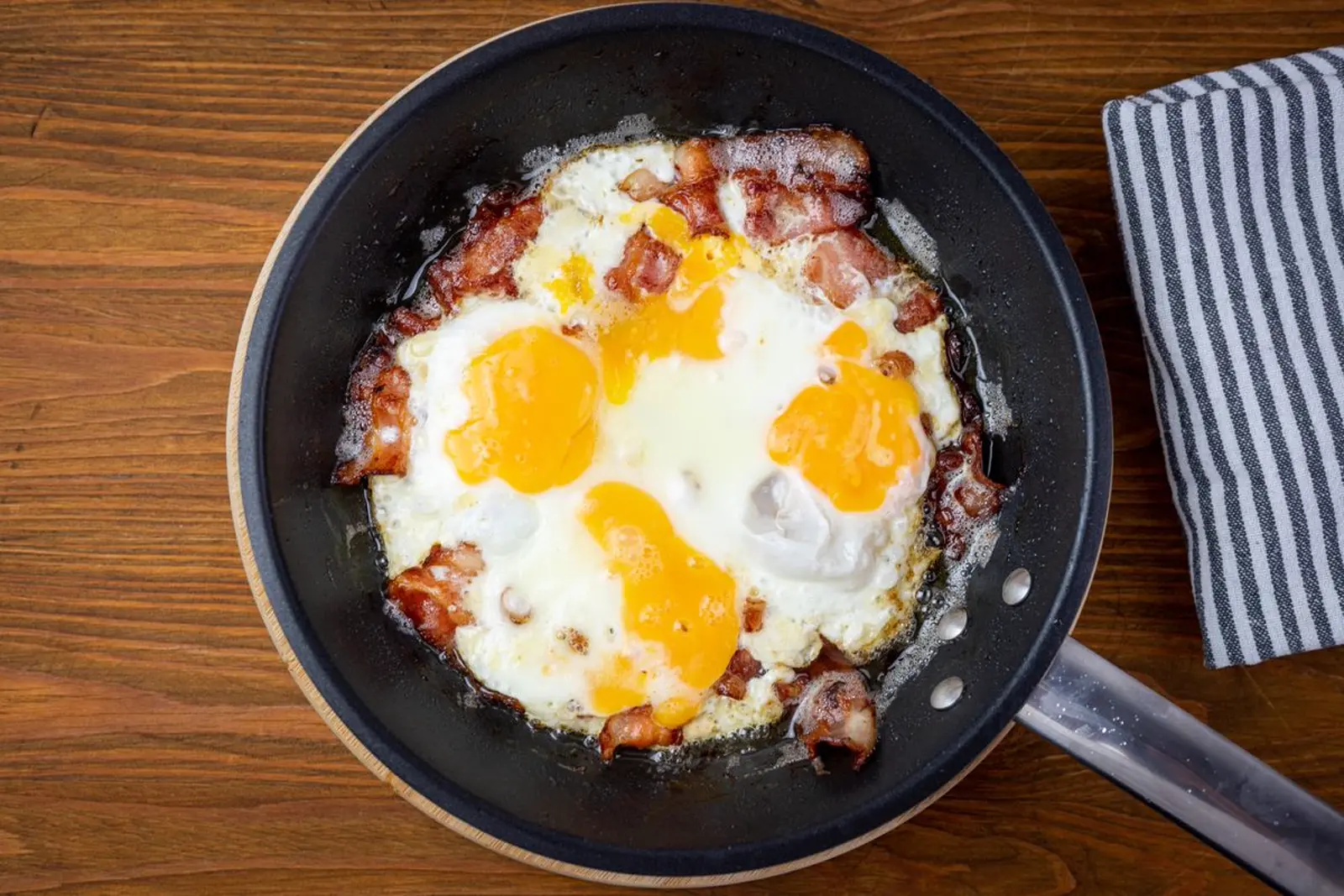
- Melt half the butter in the pan over medium-low heat. For fried eggs, crack the eggs straight into the pan and cook for 2–3 minutes until the whites are set. Break the yolks gently with a fork if you prefer them fully cooked, or leave them whole for a runny centre.
- For scrambled eggs, whisk the eggs with the milk, salt and pepper first, then pour them into the buttered pan. Stir gently with a spatula, pushing the eggs from the edges to the middle, until they are just set and still soft — about 2 minutes. Take them off the heat while they still look slightly wet; they keep cooking for a few seconds.
- Cook the eggs in two batches if your pan is small. Crowded eggs steam instead of frying, and they come out pale and watery.
Step 4: Melt the cheese on the eggs
- Lay a slice of cheese on each hot egg while it is still in the pan, or on the eggs as soon as they come out.
- Cover the pan with a lid for 30 seconds, or just let the heat of the egg do the work. The cheese should turn glossy and start to droop over the edges — that is exactly right.
- This is the moment the sandwich comes together. Cheese melted onto the egg holds everything in place, so nothing slides out when you take the first bite.
Step 5: Build the sandwich
- Place a cheesy egg on each muffin bottom, then add the bacon or sausage patty on top if you are using it.
- Season with a pinch of salt and black pepper, and add a little hot sauce or a smear of mayonnaise if you like.
- Put the muffin top on, press down gently, and serve straight away while the muffin is still crisp and the cheese is still soft.
Pro Tips for the Best Breakfast Sandwich
- Toast the muffin properly. A pale, soft muffin goes soggy in a minute. Golden and crisp on the cut sides is the whole trick.
- Cook the eggs gently. Medium-low heat and a little patience give you tender eggs. High heat gives you rubber.
- Melt the cheese on the egg. The heat of the egg melts the cheese and glues the sandwich together. Cheese on a cold muffin just slides around.
- Keep the layers in order. Egg on the bottom, cheese on the egg, meat on top. That order keeps the sandwich stable and the muffin crisp.
- Do not overfill it. One egg, one slice of cheese and one or two rashers of bacon per sandwich is enough. More than that and it falls apart in your hands.
- Serve it hot. A breakfast sandwich is at its best in the first five minutes, while the muffin is crisp and the cheese is still soft.
- Butter the muffin, not the pan. Butter on the cut sides toasts better and tastes better than butter melted in the pan — and if you want a second opinion on a quick morning version, there is a five-minute version with smoky mayo worth a look.
Fried, Scrambled or Baked: Which Egg Is Best?
| Fried egg | Scrambled egg | Baked egg patty | |
|---|---|---|---|
| How it is cooked | Fried in a pan, 2–3 minutes | Whisked and stirred gently in a pan, about 2 minutes | Baked in a greased muffin tin at 375°F (190°C) for 12–15 minutes |
| Texture | Set white, soft or runny yolk | Soft, fluffy curds that fold neatly | Firm, even round that fits the muffin exactly |
| Best for | A slow morning, one or two sandwiches | A crowd — scramble four eggs at once | Making a big batch to freeze |
| Cheese melting | Cheese on top melts from the egg’s heat | Stir the cheese in at the end, or lay it on top | Cheese on top, back in the oven for 1 minute |
| Eating on the go | Good if the yolk is cooked through | Best — nothing drips | Best — the round patty stays put |
| Watch out for | A runny yolk can drip down your wrist | Overcooking makes it dry and rubbery | Easy to forget in the oven and overbake |
| Our pick | For the weekend | For feeding the family | For the freezer batch |
There is no wrong choice here — pick the egg style that fits your morning. Fried is the classic, scrambled is the fastest for a crowd, and baked is the one to choose when you are making a week’s worth at once.
Make It Your Own — Easy Variations
Once you know the base method, the sandwich is yours to play with. Keep the muffin, egg and cheese the same — only the extras change.
For a sausage version, swap the bacon for a sausage patty and add a little maple syrup or a smear of honey mustard. For a vegetarian version, leave the meat out and add a slice of tomato, a few spinach leaves and a spoonful of pesto. For a spicy version, add a sliced jalapeño, a dash of hot sauce and pepper jack cheese instead of cheddar.
For a lighter version, use a wholemeal English muffin, one egg white with one whole egg, and a slice of low-fat cheese — the sandwich stays just as filling. For a heartier version, add a hash brown inside the sandwich: the crisp potato against the soft egg is one of the best combinations in breakfast.
For a sweet-and-salty version, add a thin slice of apple or a spoonful of apple butter with the bacon. It sounds odd until you try it, and then it becomes the version you make most.
What to Serve With a Breakfast Sandwich
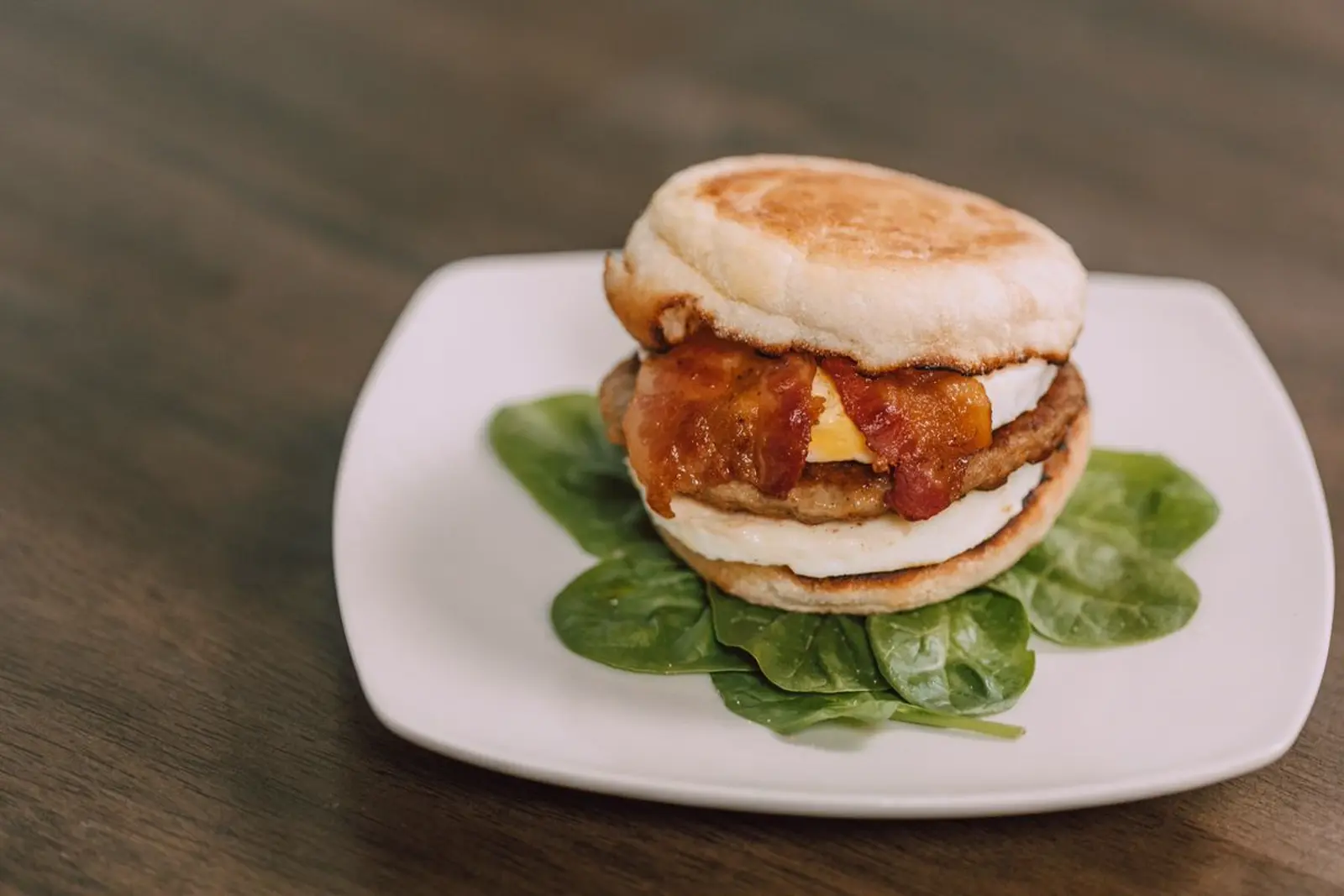
A breakfast sandwich is a full meal on its own, so the sides only need to be simple.
For a classic breakfast, serve it with a few pieces of fresh fruit and a cup of coffee or tea — the sandwich does the heavy work and the fruit keeps the plate feeling light. For a bigger weekend breakfast, add hash browns or home fries and a glass of orange juice.
For a brunch table, cut the sandwiches in half and arrange them on a platter with fruit salad and pastries. They are easy to pick up, easy to share, and they disappear fast — our fluffy pancakes recipe sits happily on the same table if you want something sweet next to something savoury.
For more ideas in this style, browse our breakfast recipes collection — simple morning meals that come together in under half an hour — or our cooking tips page for the small habits, like toasting the muffin properly, that make simple recipes like this one turn out well every time.
Storage, Freezing and Meal Prep
This is one of the best recipes for cooking once and eating all week, which is why it is a favourite for busy mornings.
Cook a batch of four on Sunday and freeze them — they are made to be cooked ahead, and one reheats in the microwave in about a minute. Wrap each finished sandwich in foil, then put the wrapped sandwiches in a freezer bag. They keep in the freezer for up to 1 month. To reheat, unwrap the foil, wrap the sandwich in kitchen paper, and microwave for 60–90 seconds until hot all the way through.
In the fridge, cooked sandwiches keep for 3–4 days wrapped in foil or cling film. Reheat them the same way, in the microwave for about a minute, or in a low oven (300°F / 150°C) for 10 minutes if you want the muffin to crisp up again.
For meal prep, cook the eggs as baked patties — they hold their shape best in the freezer — and assemble the sandwiches completely before wrapping. Leave sauces and fresh tomato out of the freezer batch and add them fresh when you reheat. If you already like cooking ahead, our air fryer chicken breast recipes use the same cook-once-eat-three-times idea for dinners.
Frequently Asked Questions
A Breakfast Worth Repeating
That is our take on the breakfast sandwich — one toasted muffin, one tender egg, cheese melted right where it belongs, and bacon if you want it. Fifteen minutes, one pan, and a breakfast that actually fills you up until lunch.
Make it once the classic way, then make it your own. And if you are building a better morning routine, have a look at our breakfast recipes page — there is a whole collection of simple morning meals waiting there, all made the same way: everyday ingredients, short methods, and no fuss.